Commercial Flat Roof in Edmond, OK
A commercial flat roof in Edmond, OK is built to drain, not to sit level, and it fails at the drains, the seams, and the tie-ins where one roof meets another. Which membrane belongs up there is a read, not a favorite.
- Drainage and every tie-in read before a price
- The membrane matched to the building, not a brand
- Recover or tear-off called plainly
Call (405) 562-8471
What a commercial flat roof in Edmond has to get right
What owners call a flat roof is almost never truly flat; it is a low-slope roof, pitched just enough to walk water to its drains.
Before naming TPO, EPDM, PVC, or modified bitumen, a commercial roofer works through how the deck drains, how much the rooftop units get walked, whether a kitchen vents grease across the field, and how long you plan to hold the property. That reading, along with the call on whether the roof can be recovered or has to come off, is on paper before a repair or a replacement gets priced.
What a flat-roof read puts on record
Repair, recover, or full tear-off, the call on a flat roof rests on a short list an Edmond owner can watch a roofer weigh before a number lands.
- 01The membrane matched to the building
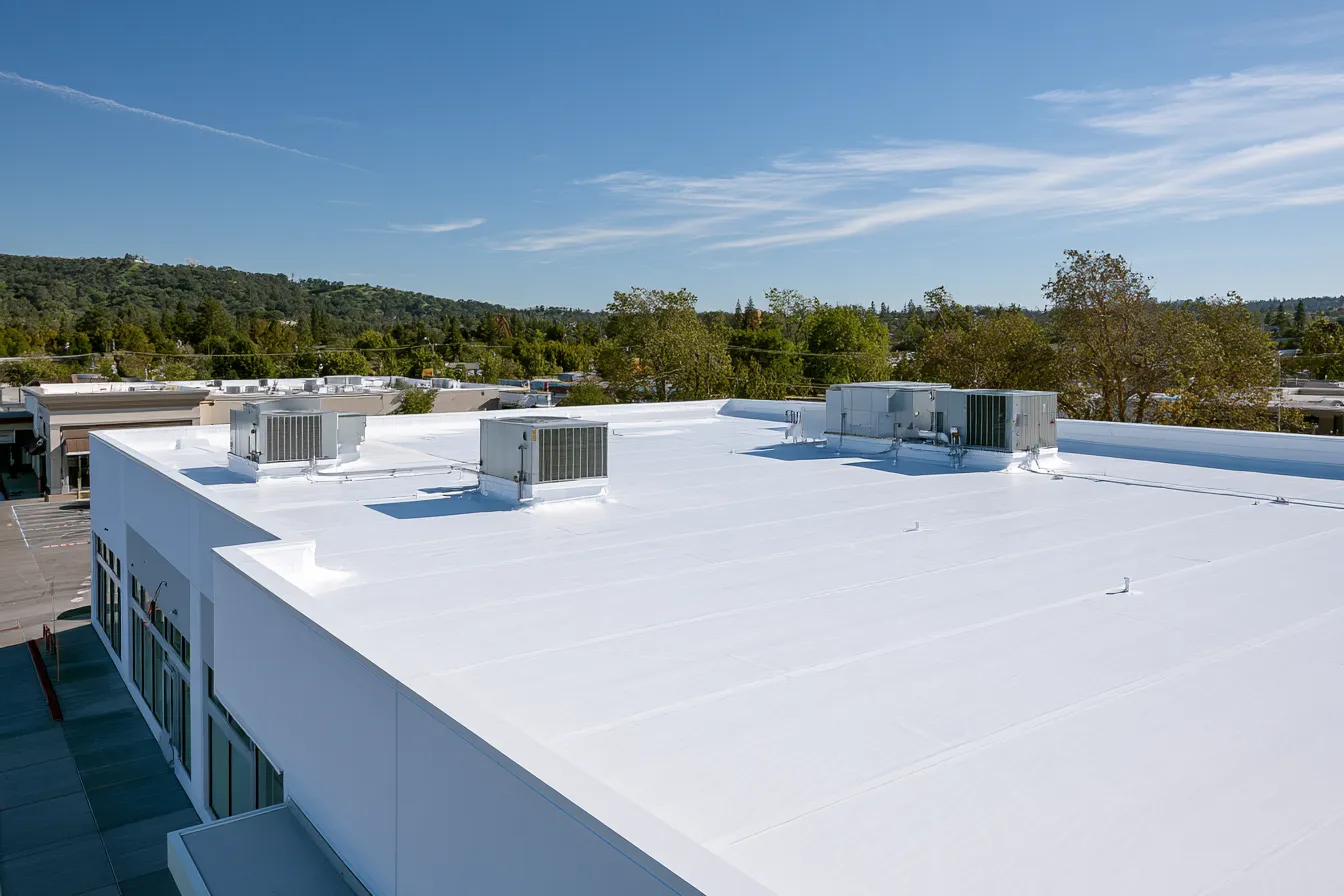
- TPO gives you a welded, reflective white skin that suits most retail and office decks. EPDM, a rubber sheet, is the quiet workhorse that runs for decades over a wide, open school or warehouse roof. PVC is the one to reach for where a kitchen or a fellowship-hall exhaust drops grease on the field, since grease eats other membranes. Modified bitumen is layered asphalt, tough enough to shrug off constant foot traffic. A roofer names one only after reading the deck, and the TPO page covers the single-ply in full.
- 02Positive drainage, checked drain by drain
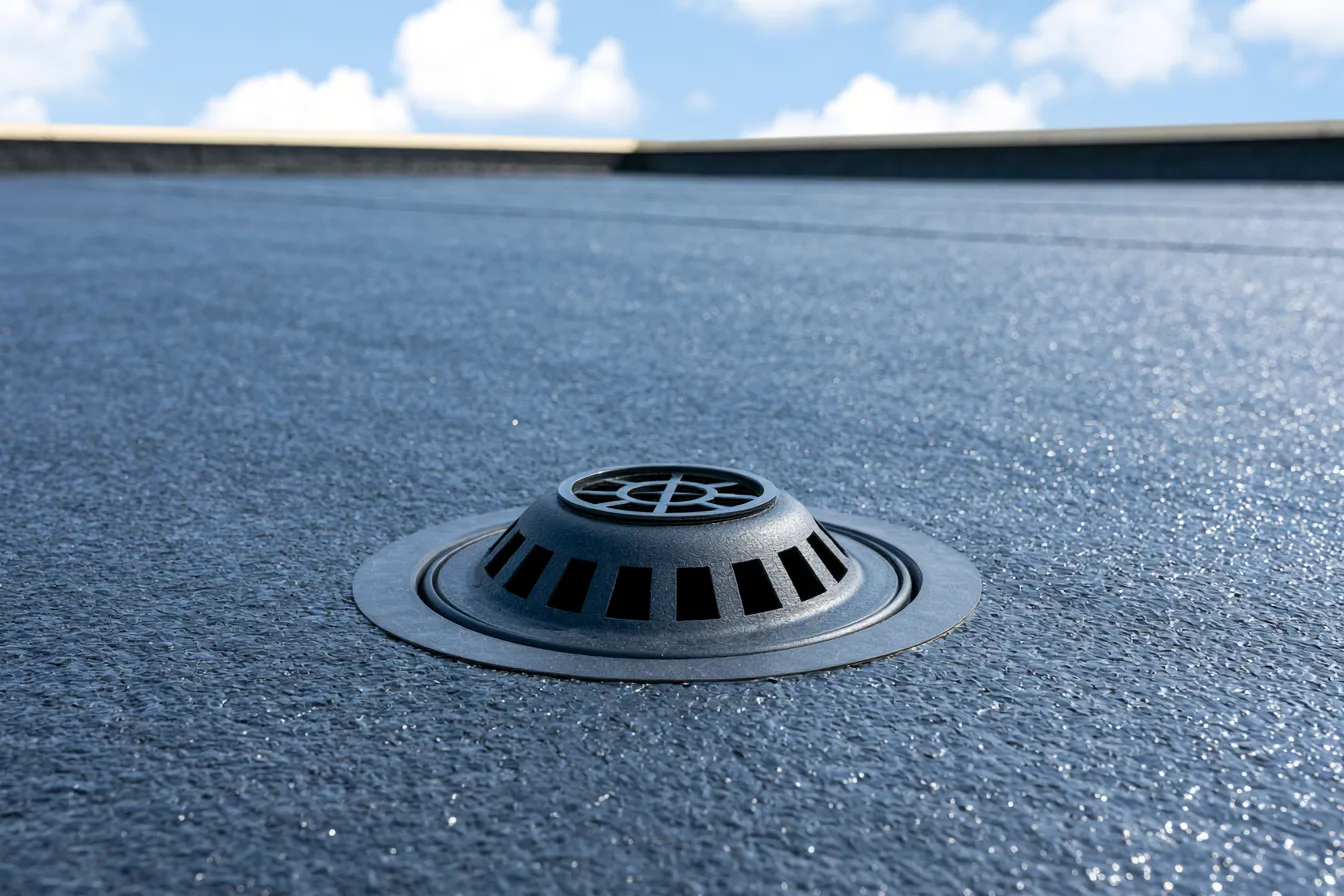
- A flat roof only works when the water leaves it, so a roofer checks that each drain, scupper, and downspout is actually clearing and not just present. The code assumes a primary drain will clog someday and requires a backup path for the overflow, which is exactly the safeguard an Oklahoma downpour tests when it drops water faster than a tired drain can take it.
- 03Ponding that leans on a seam
- Standing water is the first thing to go wrong on a low-slope roof. It loads the deck with weight it was never designed to carry and presses on every marginal seam beneath it until one gives. A roofer maps the low spots and the slow drains and writes the correction down before a hot Oklahoma summer turns a pond into a leak.
- 04The tie-ins where one roof meets another
- Edmond's churches and schools rarely wear one clean plane; a low-slope section runs into a steep-slope roof, a parapet, or a tall wall, and the tie-in where they meet has to be flashed and sealed. A roofer reads each of those transitions, because a tie-in that lifts or cracks lets water behind the membrane long before the field of the roof fails.
- 05Recover or tear off, called on the merits
- When the deck below reads dry and the roof carries only one layer, a new membrane can sometimes go over the old one and save the cost of a tear-off. But code does not allow stacking a roof over wet insulation, or over two layers already up there; then stripping it to the deck is the job. A roofer tests for trapped moisture and counts the layers before calling it.
Hail is no gentler on a flat roof than on a pitched one; it just conceals the damage, since a bruised membrane or a split seam is invisible from the lot. A local roofer gets up on the deck and dates whatever the storm left. When the membrane is worn but still sound, restoring it beats replacing it, which the roof coatings page covers, and the new roof cost guide gives fair ranges by system.
Flat-roof questions from Edmond building owners
Plain answers on membranes, drainage, and the recover-or-replace call for an Edmond low-slope roof.
Q1Which flat-roof membrane is right for my Edmond building?
Q2Why does my flat roof hold water instead of draining?
Q3Can a new roof go over the old one, or does it have to come off?
Q4How do churches and schools with mixed roof lines get handled?
Q5Does insurance cover hail or wind damage to a commercial flat roof?
Put your Edmond flat roof on record
Hand the building to Edmond Roofing Co, and a local commercial roofer reads the drainage, the seams, and every tie-in, weighs the membranes against the way you actually use the roof, and writes one scope, whether that turns out to be a repair, a recover, or a new roof. The assessment costs nothing and is yours to act on now or park for the next budget cycle.