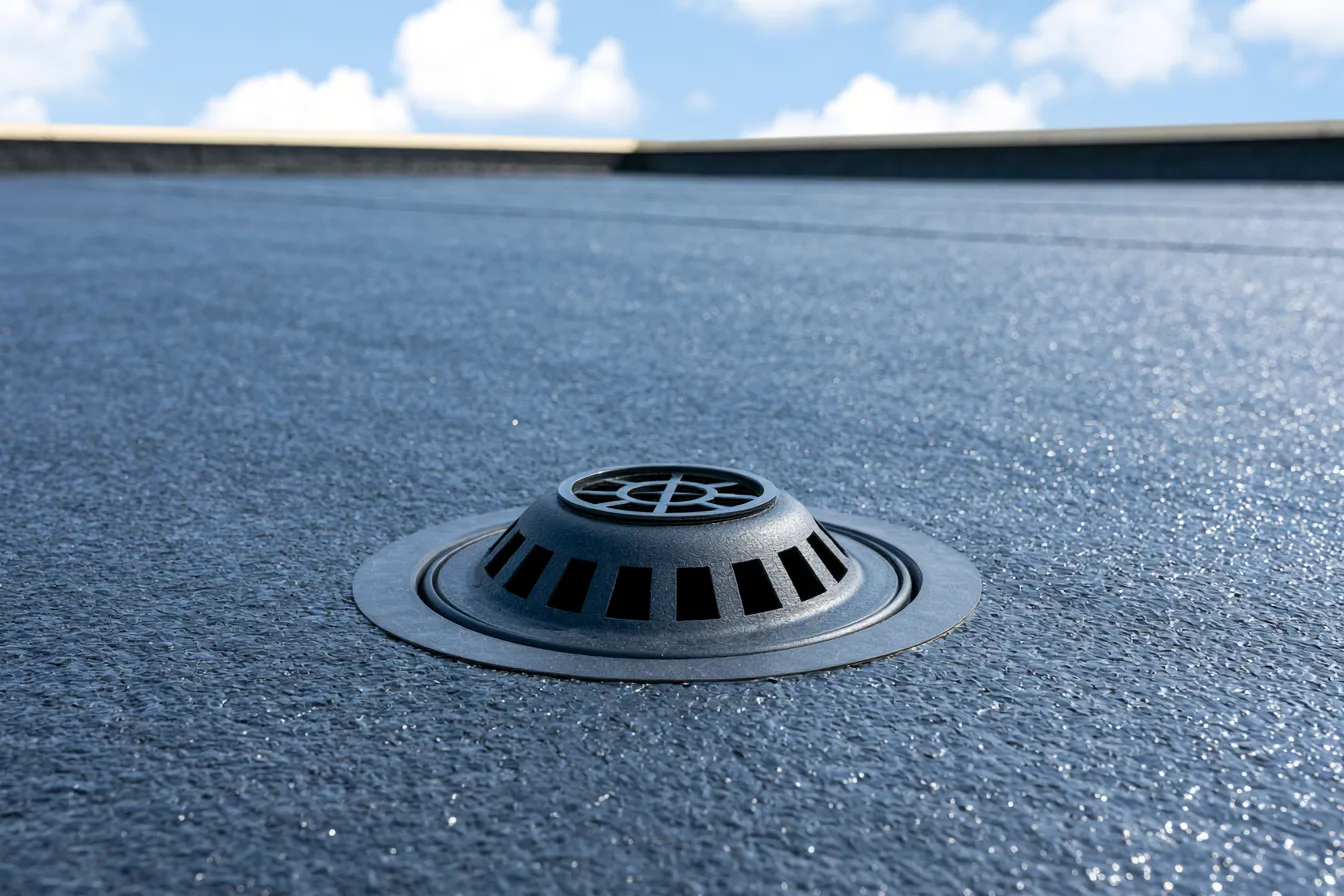
Commercial Roofing in Edmond, OK
Most stores, offices, and shops in Edmond carry a flat or low-slope membrane rather than shingles, and Oklahoma asks a commercial roofing contractor to hold a separate state endorsement.
- The full price on paper, up front
- Repairs timed to your calendar
- A fair repair-or-replace call
Call (405) 562-8471
What a commercial roof in Edmond really asks
Oklahoma treats commercial roofing as its own category. A roofer has to be registered with the state, and commercial work calls for a separate commercial endorsement on top of that registration. Every roofer Edmond Roofing Co sends to a commercial job already carries both, confirmed before your building is ever scheduled.
Edmond's commercial buildings run mixed: older storefronts downtown, professional and medical offices near the university, and newer retail on the north edge, and almost none of it wears shingles. A local roofer walks the membrane, the seams, the drains, and every rooftop curb, then puts the roof's real condition on record before pricing it. A free inspection opens that file.
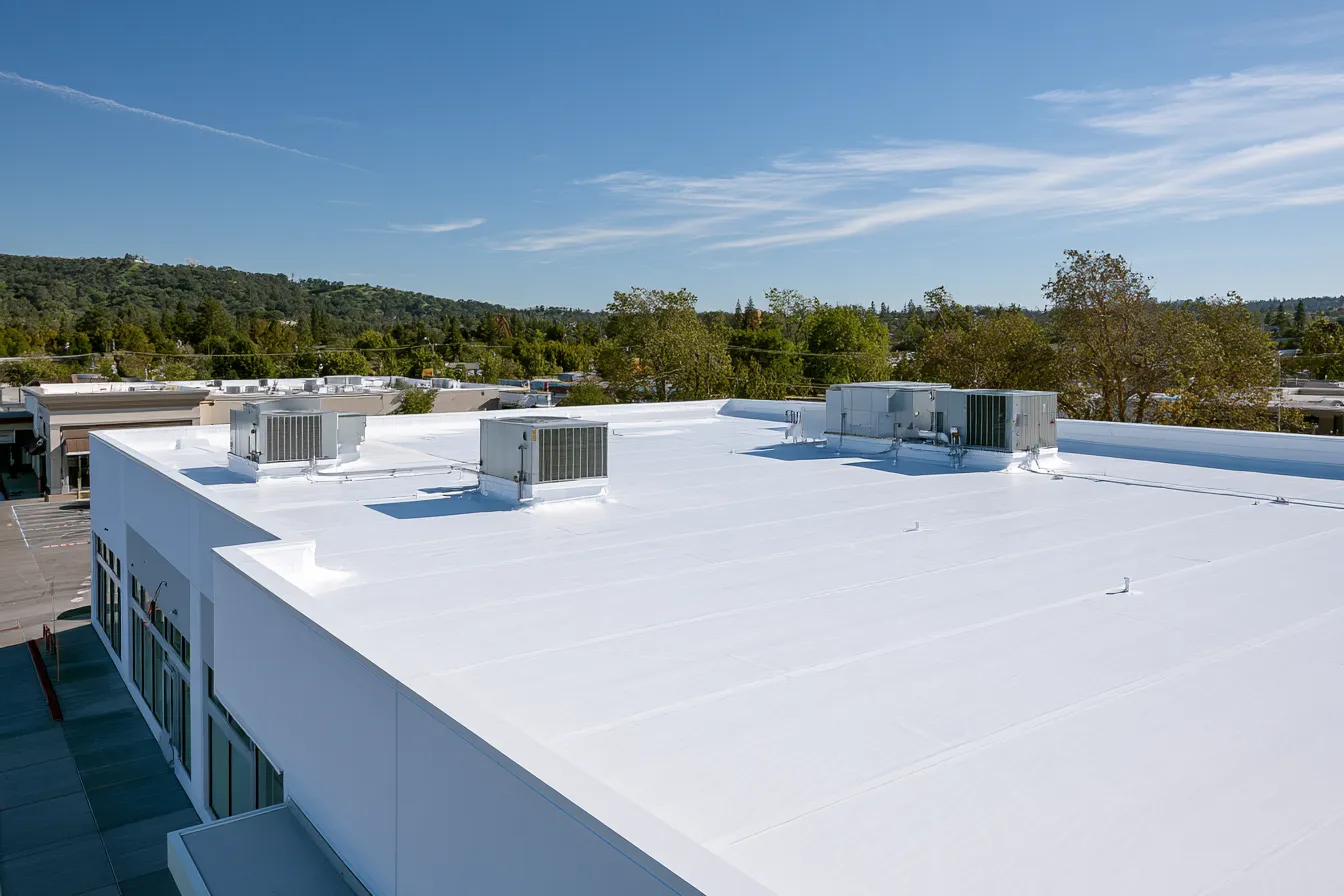
Which flat-roof system fits an Edmond building
No single flat roof wins on every building. The right one turns on how the deck drains, how much rooftop traffic the HVAC draws, whether kitchen exhaust crosses the roof, and how long you plan to hold the property. In Oklahoma County hail, how much a membrane can take counts too. A roofer names a system only after the roof has been read and documented.
TPO
The reflective white single-ply on most of Edmond's newer retail and office boxes. Its sheets weld into one sealed skin, and the bright surface pushes summer sun back off the roof, which eases the cooling load through an Oklahoma July.
Open a file →EPDM
A rubber membrane picked for endurance over looks. It asks little and runs for decades across a wide, open deck, so it suits a warehouse or a big-box floorplate on Edmond's commercial edges.
PVC
A welded sheet made to live with grease and fryer exhaust that break down ordinary membranes. A downtown Edmond restaurant, or any building venting a kitchen across the roof, is where it earns its cost.
Modified bitumen
Asphalt in reinforced rolls, tough underfoot and forgiving of a corner that drains slowly. It fits the smaller offices where someone is up top often, servicing rooftop units through the year.
Open a file →Built-up roof (BUR)
Tar and gravel in stacked, redundant plies, the old heavy method that shrugs off abuse. It still tops some of Edmond's oldest downtown buildings, where decades of proven service outweigh the extra labor.
Roof coatings
A fluid silicone or acrylic skin rolled over a tired but sound roof, buying reflective years for a fraction of a tear-off. It works only once the roof tests dry; over wet insulation it just seals the water in.
Open a file →Not sure what is even up there, or how much a hard hailstorm has quietly taken out of it? A read settles it: a local roofer identifies the membrane, puts a number on the years it has left, and dates any storm bruising before you weigh a repair against a re-roof. The new roof cost guide lays out fair ranges by system.
Four ways a commercial roof job runs
One of four scopes usually fits a commercial roof. Which one is not a guess; it is what the documented read shows, and it goes in writing before anyone is scheduled.
- 01A repair kept tight to the failure
- One fault handled alone rather than the whole roof: a lifting seam, a drain that ponds instead of clearing, a run of parapet flashing gone stiff, or a leak at the collar where a rooftop unit sits, each tracked to whatever membrane is up there now.
- 02A coating, only where the roof earns one
- When the deck below reads dry and sound, a sprayed silicone or acrylic layer restores the surface and wins years for a fraction of a full tear-off. Roll it over damp insulation and it locks the water in, which is why a moisture test lands before any recommendation, not after.
- 03A full re-roof once the system is spent
- A new low-slope assembly, modified bitumen, single-ply, or built-up, engineered and fastened to take the wind Oklahoma County drives across an open deck, chosen only when the system is finished and patching has stopped paying off.
- 04The honest coat-or-tear-off call
- Coat or tear off is the four-part question every owner deserves answered plainly: how much the roof gets walked, whether the insulation is holding water, what shape the deck is in, and how many more years you intend to own the building. All four get weighed before the advice, not once the job is sold.
Hail treats a flat roof no better than a pitched one, it just hides the damage, since a bruised membrane or a split seam shows nothing from the parking lot. Oklahoma County has taken hail up to four inches across on the record, big enough to split a membrane outright, so a local roofer photographs and dates any bruising on the first visit, then judges whether a claim is worth filing. What a flat roof hides after a storm sits on the storm damage page.
The order a commercial roof job follows
Read on record before a price, then built around your hours.
Verify the endorsement, then read the roof
Before anything else, an owner can confirm the roofer is state-registered with the commercial endorsement. From there a local roofer reads the membrane, the seams, the drains, and every curb, and brings back dated photos next to one written number.
One written scope, priced for the building
Repair or full replacement is set out in plain language, sized to the building and its budget cycle, with the figure fixed before a crew is booked. The timing stays yours to approve.
Build to spec, then document the close
The new membrane is laid, or the repair is closed to the written spec, and a final pass over the seams, drains, and flashings is photographed before the workmanship terms go in your file.
Edmond commercial roofing questions owners ask
The questions Edmond owners and managers raise before committing to a commercial roof.
Q1Is the roofer you send properly registered for commercial work in Oklahoma?
Q2How do I know whether to coat the roof or replace it?
Q3A tenant keeps reporting a drip, but the roof is not old. What is going on?
Q4Does insurance cover hail or wind damage on a commercial roof here?
Q5Will the roof work shut my business down?
Q6Who stands behind a new commercial roof, the manufacturer or the roofer?
Put your Edmond building's roof on record
Bring the building to Edmond Roofing Co, and a local commercial roofer walks the membrane, documents every weak spot, and folds repair or replacement into one written price. Nothing starts until you give the word.