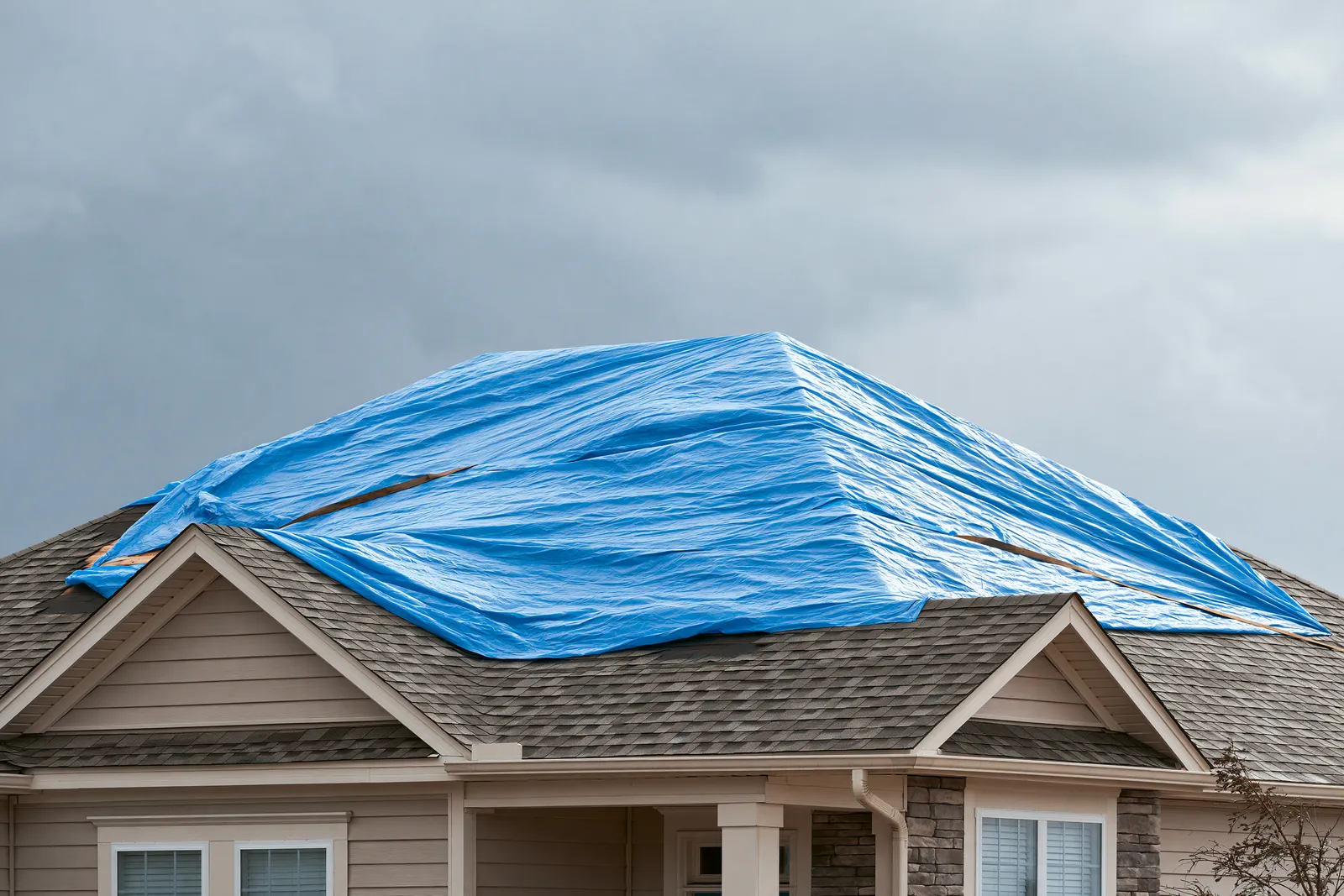
Ask a few Edmond neighbors what happens after a hail storm and someone will tell you flatly that you have one year to file. It sounds official, it gets repeated, and it sends more than one homeowner into a scramble over a deadline that may not even apply to them. On an Edmond roof, one year is only one of two clocks that matter. Oklahoma writes its own rule for wind and hail damage on a roof, and it can hand you far longer than a single spring. The other thing that decides how a claim goes is who is standing on the roof when the adjuster reads it. Here is how both clocks work on an Edmond home, and why a roofer on the slopes with your adjuster changes what gets counted, laid out alongside the fuller claims walkthrough.
Where the one-year number really comes from
Start with the source of the one-year figure, because it is not made up. Many Oklahoma homeowner policies set a reporting window, often around twelve months from the date of loss, for storm damage. Read that single line and the matter looks closed: hail fell, the clock started, and you have a year to act. That is the version most Edmond homeowners have heard, and for plenty of claims it lands close to the truth.
The problem is that hail does not keep to a tidy schedule. A stone can bruise a shingle, strip its granules, and leave a high-value Edmond roof looking sound from the driveway for a season or two before a leak ever appears. A homeowner who took the strict one-year reading would be shut out the day the calendar turned, even though no one could have seen the damage from the ground. Oklahoma law was written for exactly that gap.
How Oklahoma law widens the window
Oklahoma House Bill 3495 speaks directly to wind and hail damage on a roof. In plain terms, it lets a claim for that kind of damage be filed up to 24 months from the date of loss when the damage was not evident and could not have been found without an inspection. It does not rewrite your policy; it sets a floor your policy cannot drop below for hidden storm damage.
For an Edmond homeowner that is a practical difference, not a technicality. If a big Oklahoma County hail day quietly aged your roof toward a leak two springs ago, the door is very likely still open, well past the year a neighbor warned you about. Never take a flat one-year deadline as the final word on an Edmond roof, because the honest answer depends on when the damage could reasonably have been found. The storm-damage page covers why big-stone hail so often hides at first.
Standing with the adjuster on the roof
Here is the part that decides a lot of Edmond claims, and it happens on the roof, in person, not after the fact. When your insurer sends an adjuster to inspect a hail claim, that adjuster reads the slopes and writes down what they count. A local roofer who meets the adjuster on the roof can point out each bruise, split, and stripped patch, plane by plane, so the damage is seen up close rather than argued from the ground or guessed at from a photo.
A read like that matters most on the large, complex roof lines common across Edmond, where a fast look can miss a whole slope. A roof read alongside the adjuster tends to get counted fully the first time, which is the difference between a patch allowance and a claim that reflects the real storm. To be clear about who does what: the roofer documents and points, the adjuster decides for your carrier, and you decide with your insurer. A documented storm inspection is what puts that read on paper before the adjuster ever arrives.
What a dated inspection actually proves
The 24-month window turns on one idea: that the damage was not obvious. That is something you have to be able to back up, and you back it up with a record. A dated inspection, done after a storm and written down with photographs of every slope, shows an adjuster that the harm was real, that it traces to a specific Oklahoma County hail day, and that it was the kind of thing only a close look would catch.
Without that record, the case gets harder the longer you wait, because it becomes your memory against the calendar. With it, the timeline sits on paper and the two clocks stop being a guess. This is why the honest first move after a genuine hail day is not to file in a panic or to shrug it off, but to have a roofer read and date the roof. A free roof inspection is a no-cost way to get that record in your folder before you ever need it.
Your claim, your name, your call
Being plain about roles helps, because a claim goes sideways when they blur. You, the policyholder, own the claim and speak with your insurer; your name is on the policy and the decision to file is yours. A local roofer inspects the roof, documents the damage, and explains in plain terms what the storm did, so your conversation with the carrier is an informed one.
Be wary of anyone who offers to erase your deductible or handle the insurance company for you, because that is not how an honest claim runs in Oklahoma. Keep the claim in your hands, lean on the roofer who does the documenting and the plain read, and both clocks work for you instead of against you. If the damage points toward a full tear-off, the replacement scope walks through what that involves.
Not sure whether a past Oklahoma County hail day still leaves your Edmond roof inside the window? Give Edmond Roofing Co the address, and a local roofer will document every slope, date what the storm left, and lay out where your claim stands, at no cost. Reach out and we will tell you plainly.
See where your claim stands Call (405) 562-8471